
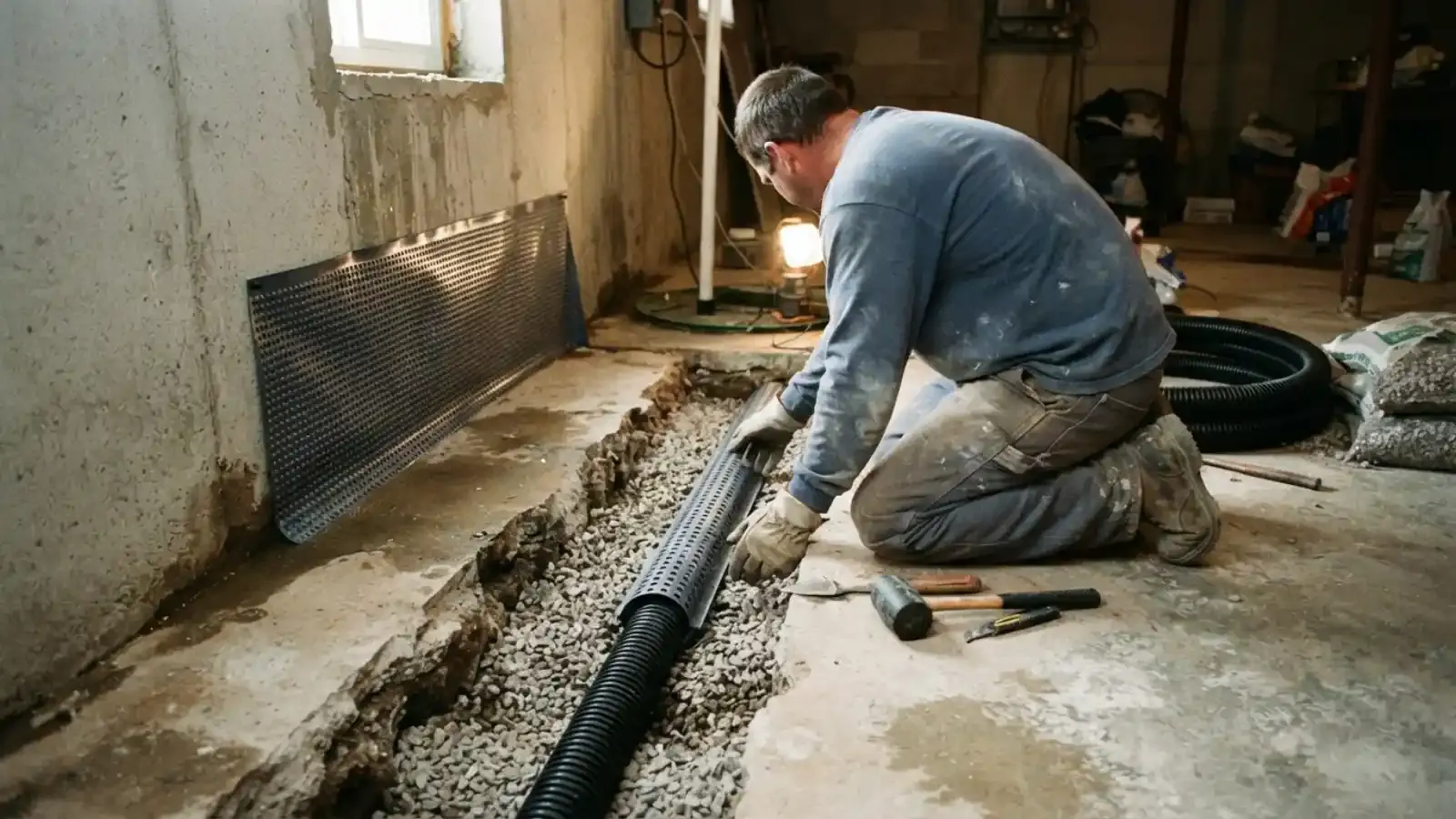
Start with the source
Basement water comes from four places: surface water from rain, groundwater pressure, plumbing leaks and sewer backups. Treating the wrong source wastes money, and sometimes the simplest source is the answer.
Look at when water shows up. Water after heavy rain points to surface water or groundwater. Water that appears on a dry day points to plumbing. Water from a floor drain with a smell points to the sewer.
Match the fix to the source
| Source | First fix | Escalation |
|---|---|---|
| Surface runoff | Downspouts, gutters, grading | Exterior drainage by a specialist. |
| Groundwater pressure | Sump pit and pump | Interior perimeter drainage. |
| Plumbing leak | Leak detection and repair | Line replacement. |
| Sewer backup | Cleaning and camera | Lateral repair or backwater valve. |
What a plumber can do and cannot do
We install sump systems, interior drains connected to pits, floor drain and backwater valves and we repair leaks. We do not do exterior excavation, foundation crack injection or structural repair. If your walls bow or cracks widen, involve a structural professional.
- Sump pit and pump with backup.
- Interior drain channel to the pit.
- Backwater valve on a floor drain or line.
- Leak repair on supply and drain lines.
Low-cost steps first
If a sump pump is already in place, see sump pump repair to make sure it is working.
- Extend downspouts away from the foundation.
- Regrade soil to slope away from the walls.
- Clean gutters before wet seasons.
- Run a dehumidifier for humidity, not for water entry.
Reading the signs on your walls and floor
White chalky deposits called efflorescence mean moisture is moving through masonry, even if the wall feels dry. Dark stains near the floor joint suggest water seeping where the floor meets the wall. Rust at the base of a furnace or water heater points to repeated dampness.
Mold-like odors with no visible water often mean humidity from a leak or a poorly drained foundation. Write down where and when you see each sign, because that pattern tells a plumber whether to look at drainage or at piping.
A plumber's approach, step by step
The order matters, because a pipe leak found early can save the cost of a drainage system. When groundwater is the source, sump pump installation and repair comes first.
Check the pipes
We rule out supply and drain leaks, including the water heater and washer connections.
Check the drains
We test floor drains and the sewer line for slow flow or backup.
Check the pump
If there is a sump, we test the pump, the float and the discharge.
Plan the fix
We lay out the choices and the order that suits the source.
Insurance and documentation
Standard homeowner policies often cover sudden water damage from a burst pipe but treat groundwater seepage and sewer backup differently, so read your own policy and ask your agent about backup coverage. Take dated photos of the water, the source and any repair.
Keep invoices from every plumbing visit. They show what was checked and fixed and can help with claims and with the sale of the house later.
Questions to ask any waterproofing contractor
A contractor who cannot name the source is selling a product and not a solution. Insist on a clear answer first. For plumbing sources, you can start with leak detection.
- What is the source of the water you found?
- What does the written warranty cover and who honors it?
- Where will the water go once the system collects it?
- What maintenance does the system need?
Keeping the basement useful afterward
Once the water source is under control, plan the finishing steps. Raise stored items on shelves, use plastic bins and keep a dehumidifier running in humid months. Leave a clear path to the sump pit, the floor drain and the water shutoffs so service is easy.
If you plan to finish the space, tell the contractor about the sump, the cleanouts and the main valves first. Good plans leave access panels for the things that need servicing.
Humidity versus water
A damp feeling is not always water entry. Warm humid air meeting a cool wall can cause condensation, and a dehumidifier handles that better than a drain system. A simple test is to tape a square of plastic wrap to a wall for a few days and see whether moisture forms on the room side or the wall side.
Moisture on the room side points to humidity, and moisture on the wall side points to water coming through. The test costs little and keeps you from treating the wrong problem.
What to know in Florissant
Florissant's postwar boom took the city from 1,369 people in 1940 to 38,166 in 1960, and many basements date from that era. Older walls and floors often lack interior drainage, which is why moisture and floor joint seepage are common questions.
The City of Florissant runs a Sewer Lateral Insurance Program and coordinates dye testing with the Metropolitan St. Louis Sewer District when a sinkhole appears, so a wet yard near the sewer line is worth reporting to the city.
We look at basements from Spanish Lake to Bridgeton.
Sources: City of Florissant services page and Historic Florissant.
Standards and sources
Where this page describes city rules, such as permits, lateral program terms and items to keep out of drains, the City of Florissant is the source. Terms can change, so confirm with the city before you act.
Sources: City of Florissant services page.
Local questions answered
No. A plumbing leak is the cheapest cause to rule out, so we check it first.
It controls groundwater that reaches the pit. Surface water needs gutters and grading.
Report it to the City of Florissant engineering office. The city arranges a dye test with MSD.