Choose the right plunger
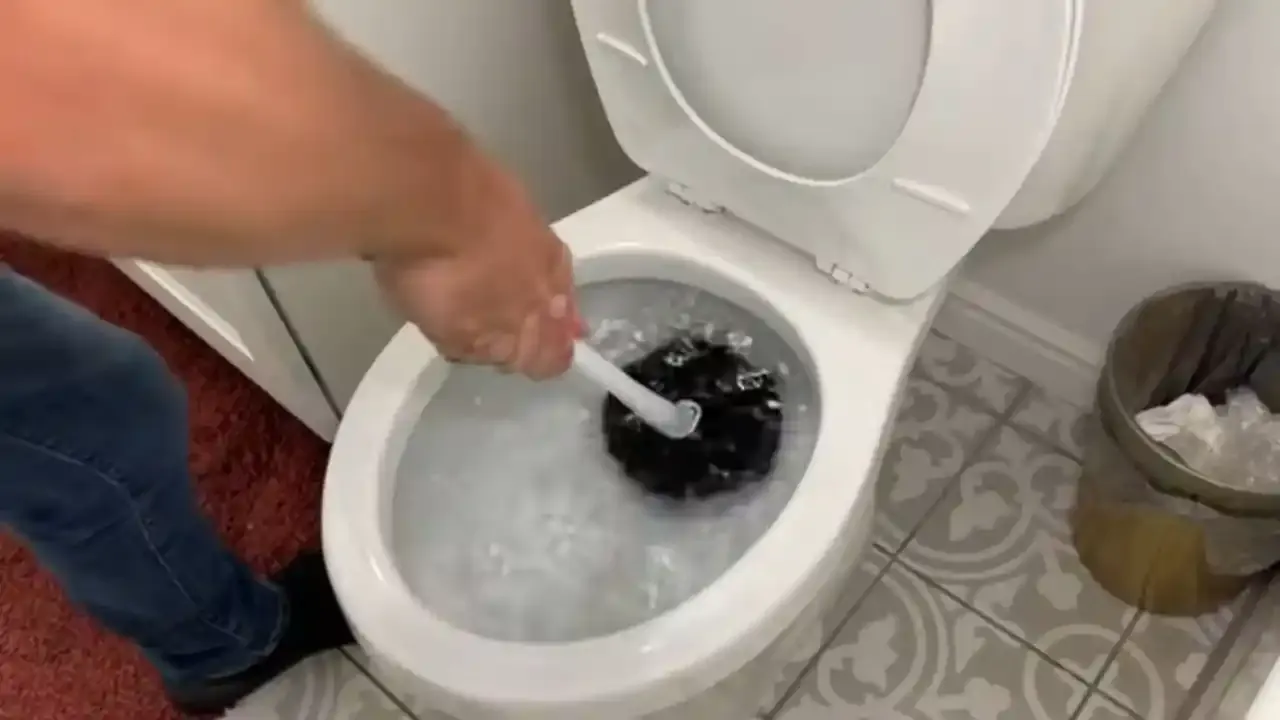
A flat-faced cup plunger works on sinks and tubs, where a flat drain surface lets it seal. A toilet bowl has a curved drain opening, so you need a flange plunger, which has a soft rubber sleeve that extends below the cup and seats in the opening.
An accordion plunger made of hard plastic can move a lot of air, but it is awkward and can scratch porcelain, so a flange plunger is the better choice for most households.
How to plunge a toilet
Pull the plunger away on the last stroke. If the water drains, flush once to confirm. If not, repeat a few times before trying something else.
Seat the plunger
Insert the flange into the drain opening so the cup covers it fully.
Fill to cover
Water should cover the cup. Add water if the bowl is low.
Push gently first
The first push should be gentle to expel trapped air.
Pump with a seal
Push and pull firmly for ten to fifteen strokes, keeping the seal.
Signs plunging is the wrong tool
Those signs point past the toilet to the drain line. Our drain cleaning and sewer line cleaning services handle that.
- The toilet clogs again within hours.
- The tub or shower gurgles when you flush.
- Water rises in a lower drain when you plunge.
- A second toilet is also slow.
- You have plunged a dozen times with no change.
Things not to do
If water spills over the rim, close the supply valve behind the toilet to stop it filling.
- Do not use liquid drain chemicals in a toilet. They can crack a bowl and burn skin.
- Do not flush wipes, even those sold as flushable.
- Do not keep flushing hoping the clog clears, since it can overflow.
- Do not force a plunger with extreme pressure that can crack the seal or wax ring.
What a plumber uses instead
A closet auger is a short cable with a curved end that goes through the toilet trap without scratching porcelain. It clears the object or mass that a plunger cannot reach. If it does not clear the clog, a camera shows whether the problem is beyond the toilet.
Cup plunger or flange plunger
A cup plunger has a flat rubber bell and works on sinks and tubs where the drain is flat. A flange plunger has an extra rubber sleeve below the bell that fits into the toilet drain opening and gives a tighter seal. For a toilet, the flange type is the better tool nearly every time.
Look for firm rubber that holds its shape and a handle long enough to push comfortably. A cheap plunger that folds inside out will not move water. Keep one plunger for the toilet and a different one for sinks, for both hygiene and fit.
A technique that works
Slow, firm strokes beat fast ones, because the aim is to move water back and forth through the clog, not to splash it.
- Make sure there is enough water in the bowl to cover the plunger. If the bowl is low, add water from a bucket.
- Seat the sleeve fully in the drain opening and press gently first to push air out.
- Push and pull in steady strokes, keeping the seal.
- After ten or so strokes, pull off and see if the water drains.
- Repeat a few rounds before you decide the clog is stubborn.
When the plunger is the wrong answer
Stop if the bowl is rising toward the rim and the plunger does nothing, or if water backs up in a tub or floor drain at the same time. Those signs point to a blockage deeper in the line, and more plunging only pushes waste around.
A closet auger, which is a short toilet-specific cable, reaches farther and is a good second tool. Avoid chemical drain openers in a toilet, because they can sit in the bowl and burn skin if you then plunge. If the line is the issue, our toilet repair and drain cleaning crews handle both ends.
Keeping the bathroom clean while you work
Lay old towels around the base and wear rubber gloves. Keep the lid of the tank closed and the water supply valve nearby so you can stop a refill if the bowl is close to the rim. Small steps like these turn a bad moment into a manageable one.
When the job is done, rinse the plunger with hot water and a splash of disinfectant, then let it dry upright in a bucket. Store it where kids and guests will not step on it. A plunger kept by the toilet gets used earlier, and an early plunge is the one that works.
What not to put down a toilet
The City of Florissant lists wipes among the items to keep out of drains. A toilet is built to handle waste and toilet paper, and little else. Keeping a small trash can next to the toilet makes the right choice the easy one, and it spares your lateral from a slow pile-up of fibers.
- Wipes, including the kind labeled flushable.
- Paper towels and tissue boxes.
- Cotton balls, swabs and dental floss.
- Feminine products and diapers.
- Kitty litter and food scraps.
Low-flow toilets and clogs
Many newer toilets use less water per flush, which saves water but can leave less force to push waste through the trap. If a toilet clogs often even with careful use, the cause may be the model, a partial blockage in the drain or scale in the rim jets. A plumber can tell which, and a different seat or a fix to the flush valve sometimes solves it without replacing the toilet.
If you have had to plunge the same toilet several times in a month, call. Repeated clogs are a symptom, and the plunger only treats the effect.
What to know in Florissant
The City of Florissant lists wipes, paper towels, medication, grease and oils among things that should never be flushed or poured down household drains. Those items are the usual cause of toilet clogs that spread into the lateral, which the city runs a program to repair when a lateral is defective.
A toilet that clogs on a street with large trees may be a sign of roots in the lateral, not a bad toilet. The city recommends annual cabling when large trees or shrubs are close to the line.
Neighbors in Ferguson and Spanish Lake call us with the same toilet questions.
Source: City of Florissant services page.
Standards and sources
The EPA WaterSense program labels toilets and faucets that meet its water efficiency criteria, which is worth checking when a repair turns into a replacement. Permit questions for fixture work go to Florissant Public Works.
Sources: EPA WaterSense program and City of Florissant services page.
Local questions answered
Hardware stores in the area carry flange plungers. Look for a rubber sleeve below the cup.
Yes. If other drains slow too, the main line may be blocked.
Try several rounds of ten to fifteen strokes, and stop if nothing changes.