
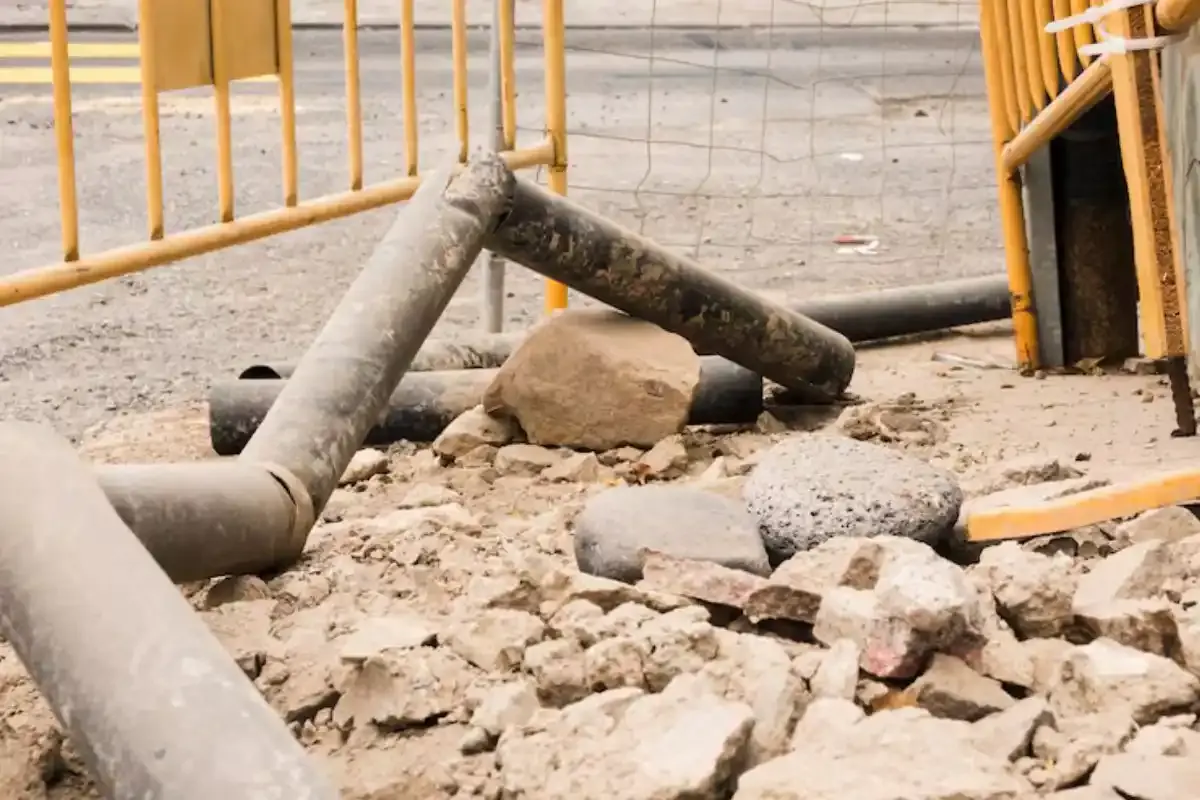
Why cast iron pipes fail
Cast iron was a standard drain and sewer pipe material for much of the twentieth century. It is strong and quiet, but it corrodes from the inside out, and the buildup of rust scale narrows the pipe and roughens the wall so waste hangs up.
Eventually the wall thins. A pipe can crack, a joint can open or a section can collapse. Roots enter at those openings, and a line that looked sound for decades can start clogging every few months.
Signs of a failing cast iron line
A camera inspection shows the pipe interior, so you decide with evidence.
- Slow drains in several fixtures.
- Rust colored debris on a cable or in a drain.
- Sewer smell near the stack or in the basement.
- Cracks or flaking pipe visible in a basement run.
- Repeated main line backups.
Repair options for cast iron
| Option | Best for | Limits |
|---|---|---|
| Cleaning and monitoring | Rough pipe that is still sound | Buildup returns. |
| Spot repair with new pipe | A single cracked section | Needs digging or wall opening. |
| Pipe lining | Long runs of aging pipe, cracks and root entry | Not for collapsed pipe. |
| Replacement | Collapsed or badly corroded pipe | Largest disruption. |
Lining or replacing: how to choose
Lining makes sense when the pipe still holds its shape. A resin liner cures inside and creates a new pipe within the old one, with less digging. If the camera shows a collapse or a sag with standing water, replacement is better.
We explain the footage and give both price paths when both are plausible, so you can compare. See sewer line repair for the full process and hydro jetting when scale needs to come off first.
Cost drivers
Always ask for a price in writing and for the camera footage.
Length of the run
More pipe, more cost.
Depth and surface
Under concrete is costlier.
Method
Lining, spot or full.
Access
Cleanout location and clearance.
Why cast iron fails after decades
Cast iron was a common drain material for many years, and it can last a long time. Over decades, the inside of the pipe develops a rough scale from corrosion, and the scale catches paper, grease and roots. Joints sealed with old materials can loosen and let roots in.
The outside of the pipe can also corrode in wet soil, and a pipe that rusts through leaks sewage into the ground. A recorded camera pass tells us whether you have light scale, a cracked section or a collapse, and the repair depends on which.
Repair choices compared
We lay out the options with the camera footage so you can see why a repair fits. See sewer line repair for the full range, and sewer camera inspection if you want a recording before deciding.
| Condition | Likely repair | What to expect |
|---|---|---|
| Heavy scale, pipe still sound | Jetting, then monitor | Flow improves, scale may return. |
| One cracked section | Spot repair | A short dig and a new pipe section. |
| Joints leaking, pipe otherwise sound | Trenchless lining | Little digging, a new inner wall. |
| Collapsed or heavily corroded run | Replacement | Excavation along the failed section. |
Questions to ask before you hire
A good contractor answers these without hesitation. If a quote jumps straight to replacing everything with no recording, ask why.
- Will you show me the camera recording before and after?
- Is the repair a spot fix or the whole run?
- Who handles permits and inspection?
- What is the written warranty on the work?
Roots and cast iron
Roots look for moisture and nutrients, and a joint that weeps a little gives them both. Once a hair-thin root enters, it grows into a mat that catches paper and slows flow. Cutting the roots gives relief for a time, but the root will return unless the joint is sealed or the pipe is lined or replaced.
If trees you love sit near the line, plan on a maintenance schedule of cleaning and a recording each year or two so you catch growth early. Keeping a record helps you see the pace of change and decide when a permanent repair makes sense.
Planning for a repair that fits the house
A repair under a slab, a deck or a mature tree costs more and takes longer than one in an open yard. Access matters as much as the pipe, and a plan that avoids a driveway or a patio can save thousands in restoration. We walk the line with you and point out where digging would be needed.
If you are planning other work, such as a new patio or an addition, repair the line before you build over it. Fixing a pipe under new concrete is a bigger headache than doing it first.
Signs you may be heading toward a failure
Any one of these is worth a look, and two or three together are a strong reason to schedule a camera inspection before a backup forces the question.
- Slow drains in the lowest fixtures that clear and return.
- Gurgling sounds when the washer drains.
- Damp or sunken patches in the yard along the line.
- Sewer odors in the basement or near a cleanout.
- A rust-colored stain on the outside of exposed cast iron.
What to know in Florissant
Florissant's population rose from 1,369 in 1940 to 65,908 in 1970, so many of its homes were built in the years when cast iron stacks and clay laterals were common. That does not mean every house has failing pipe, but it does mean a house of that age is worth a look.
The City of Florissant's Sewer Lateral Insurance Program may cover defective residential sewer lines from the main sewer to within five feet of the foundation, with a $50 annual fee and a refundable $300 deposit. The pipe inside that five-foot zone and in the house stays the owner's responsibility, which is where interior cast iron stacks fall.
Older lines in Ferguson and Bridgeton fit the same pattern, and we repair them there too.
Sources: City of Florissant services page and Historic Florissant.
Standards and sources
Where this page describes city rules, such as permits, lateral program terms and items to keep out of drains, the City of Florissant is the source. Terms can change, so confirm with the city before you act.
Sources: City of Florissant services page.
Local questions answered
No. The program covers the lateral from the main sewer to within five feet of the foundation. Inside that zone is the owner's cost.
If a camera shows heavy scale, cracks or leaks, planned replacement beats an emergency.
It is intended as a long-term repair for suitable pipe. Ask about the liner material and warranty.