
What makes a unit condensing
A condensing tankless heater has a second heat exchanger that captures heat from the exhaust gases, cooling them until water vapor condenses. That raises efficiency, and it also means exhaust is cool enough to use plastic venting and that the unit produces acidic condensate.
Both facts shape the installation. Venting is usually PVC, CPVC or polypropylene through a sidewall or roof, and the condensate must drain to a safe place with a neutralizer in many cases.
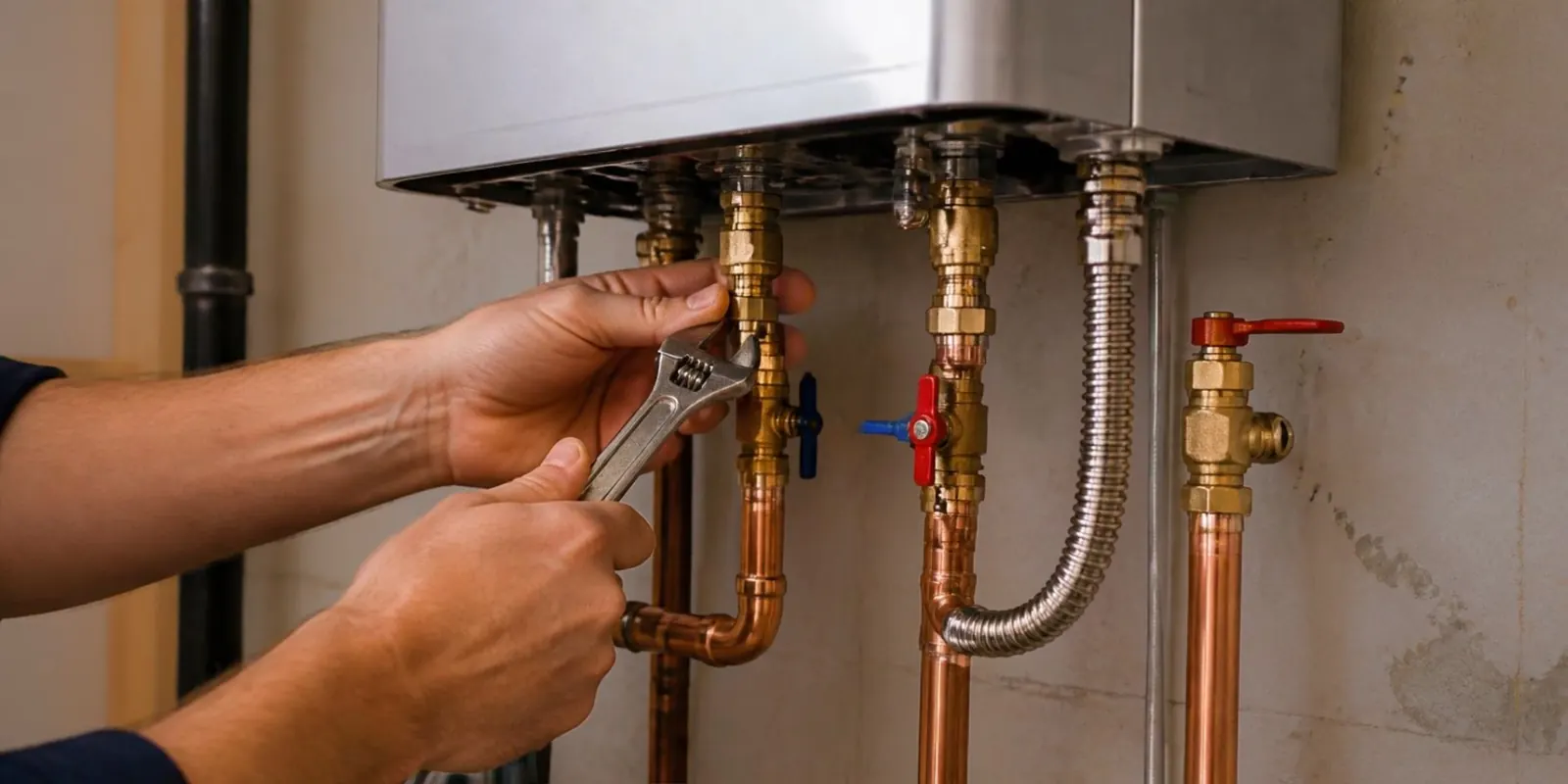
What a proper install includes
The isolation valves matter later. They let a technician flush the heat exchanger without cutting pipe.
Gas line check
Capacity is checked against the unit's maximum input.
Sealed venting
Intake and exhaust run to the manufacturer's rules and lengths.
Condensate path
A drain or pump carries condensate to a floor drain or standpipe, often with a neutralizer.
Water connections
Isolation valves for flushing, a pressure relief valve and a recirculation option where wanted.
Common installation problems
All five show up on poor installs and are avoidable with a pre-install visit. For the larger picture of the project see water heater installation.
- Gas line too small for peak demand.
- Vent run longer than the unit allows.
- No safe place for condensate.
- No flush valves, which makes descaling harder.
- Poor combustion air for a unit that is not sealed.
Condensing versus non-condensing
| Feature | Condensing | Non-condensing |
|---|---|---|
| Efficiency | Higher | Lower. |
| Vent material | Plastic | Stainless steel. |
| Condensate drain | Required | Not required. |
| Upfront cost | Higher | Lower. |
Planning the install step by step
Planning the route for the vent and drain before the day of the install is what prevents a second trip. Ask for the plan in writing.
Site visit
We check the gas line size, vent route, drain access and electrical outlet.
Quote and permit
The written price lists parts and the permit step where one applies.
Installation
The old heater comes out, the new unit mounts, and venting and condensate are connected.
Startup and test
We test combustion, flow, temperature and the condensate drain before we leave.
Maintenance that protects the investment
A condensing unit has a heat exchanger that scale can coat, especially in hard water. Annual flushing with a descaling solution keeps flow and efficiency steady, and it is easy when isolation valves were installed at the start.
Check the condensate drain and the neutralizer cartridge as part of the same visit. A clogged condensate line can shut the unit down, and a spent neutralizer lets acidic water reach your drain. Our tankless water heater page covers flushing and repair.
When a condensing unit is not the right choice
We tell you when a simpler heater fits better. If you need a fast swap, water heater replacement covers failed tanks.
- There is no practical route for a plastic vent to the outside.
- No drain is available for condensate and a pump is not workable.
- Hot water use is low and a tank heater would serve well.
- The budget favors a lower-cost non-condensing unit.
Electrical and gas details
A condensing tankless heater still needs electricity for its fan, controls and sometimes a condensate pump, so an outlet or a dedicated circuit must be nearby. The gas line has to deliver enough fuel at full firing, and the meter and line sizing are part of the plan.
We check these before quoting so the day of installation holds no surprises. If a larger gas line or a new circuit is needed, the quote lists those as separate lines so you can see why the price moves.
What a good quote includes
A quote that lists these items shows the installer has thought about your house. A quote that lists only the unit and a lump sum leaves you guessing at what happens on the day.
- The model, capacity and efficiency rating.
- Venting material, length and termination point.
- Condensate drain route and neutralizer.
- Gas line or electrical upgrades if any.
- Permit, startup test and labor warranty.
Questions homeowners ask us
If your answers lean toward tank, see water heater installation for options.
Will it fit where the old heater is?
Most units mount on a wall, which frees floor space, but the vent route must be clear.
Is it noisy?
Fans make some noise, so location matters in a bedroom wall.
Does it work in a power outage?
No, the controls need power, so plan for that.
Can I run a recirculation line?
Yes, and it shortens the wait for hot water in long runs.
What to know in Florissant
Condensate is acidic, and Missouri American Water's 2023 report lists a high pH in its treated water because of lime softening, which is a separate matter. What matters for the drain is the unit's condensate, so follow the manufacturer's neutralizer guidance and ask Public Works what applies to discharge in your home.
The City of Florissant lists water heater work among residential projects that need a permit. A new condensing unit with new venting should be permitted and inspected where required.
We plan condensing installs in Hazelwood and Bridgeton with the same venting checks.
Sources: City of Florissant services page and Missouri American Water 2023 water quality report.
Standards and sources
General information on tank and tankless water heater types, efficiency and temperature settings is published by the U.S. Department of Energy. Permit rules for water heater work come from the local building office, and the City of Florissant lists plumbing among residential projects that need a permit.
Sources: U.S. Department of Energy Energy Saver guide to water heating and City of Florissant services page.
Local questions answered
Usually to a floor drain or a standpipe, through a neutralizer. We check the path on the pre-install visit.
Yes. Descaling and a check of the condensate line are standard.
Usually not. Condensing exhaust is vented separately with sealed plastic pipe.