
What the program covers
According to the city, the Sewer Lateral Insurance Program covers defective sewer lines for residential properties from the main sewer to within five feet of the home's foundation. Homeowners pay for work inside the home or within that five-foot zone.
The program excludes septic systems, commercial and industrial properties and multi-family buildings with more than six units. It also does not cover landscaping, decks and most concrete damage, though public sidewalk and street work is covered.
How the process works
Denied applications keep the deposit to cover the inspection cost.
Apply and pay the deposit
A $300 application deposit is refunded if the repair is approved.
City plumber inspects
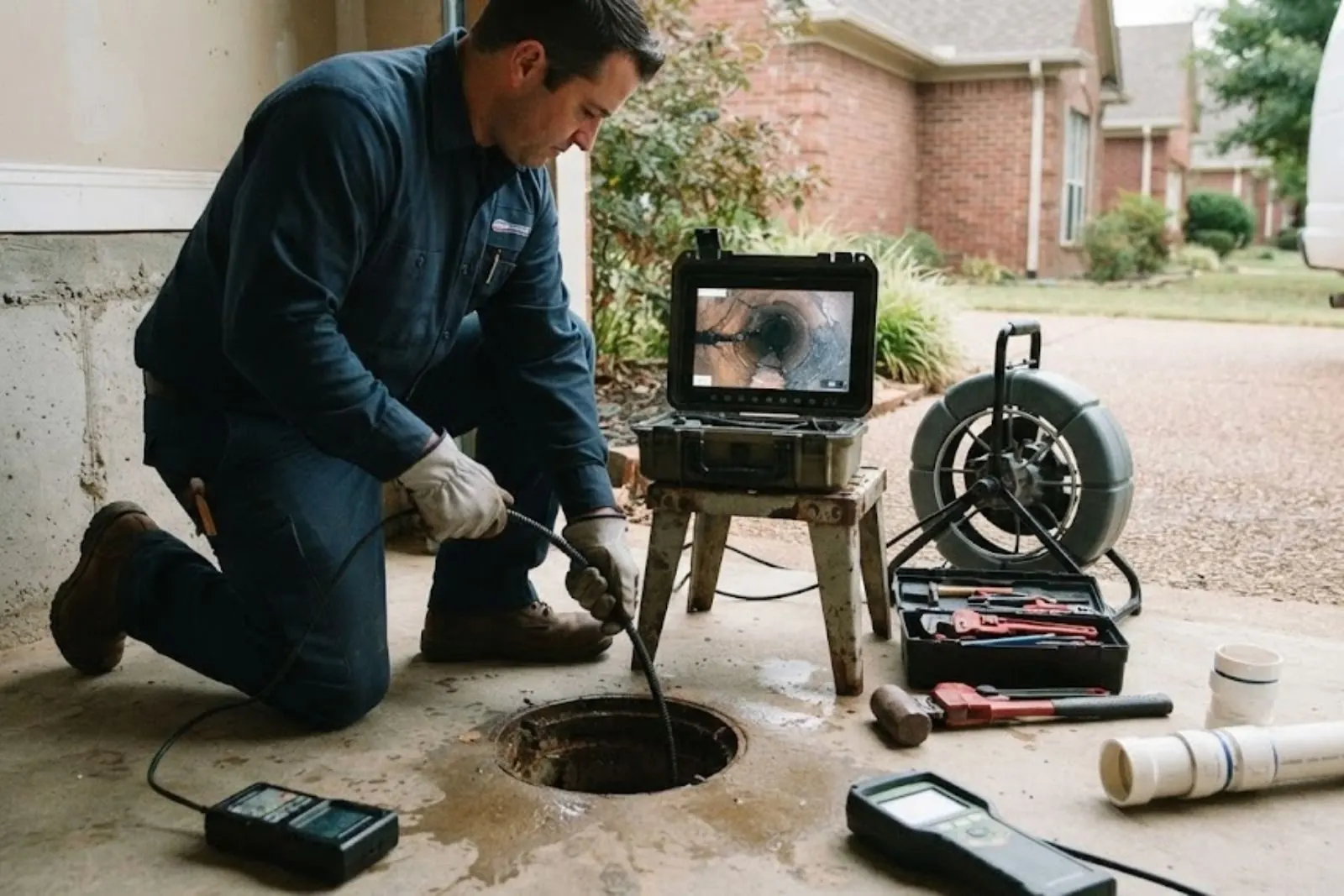
A city plumber inspects the line by video.
City Engineer reviews
The City Engineer reviews the report and decides.
Repair is scheduled
Approved repairs average about two weeks to schedule.
Eligibility steps people miss
Keep a written record of every cabling visit. Our drain cleaning team documents what was found, and a sewer line cleaning visit counts as the cabling step when it is done by a licensed plumber.
- The line must have been cabled by a licensed plumber or drainlayer without success, or the city or MSD must have confirmed that a sinkhole is linked to the line.
- Homeowners must provide outdoor water and electricity on repair day.
- Someone 18 or older must be present.
- The new seed must be watered afterward.
What stays your responsibility
Everything inside five feet of the foundation and inside the house is the homeowner's. That includes the interior stack, floor drains and the section at the wall. If you have a problem in that zone, see sewer line repair. We also help you with a before and after camera record.
A homeowner's timeline
Keeping dates, invoices and photos in one folder makes the application smoother.
Notice a problem
Slow drains, backups or a sinkhole in the yard are the usual first signs.
Document it
Have a licensed plumber cable the line and write down the results.
Apply
Submit the application and the $300 deposit to the city.
Inspection and decision
The city plumber inspects by video and the City Engineer reviews it.
What a plumber can document for you
This record supports your case and speeds up planning. Our sewer camera inspection provides the recording, and the city does its own video inspection after you apply.
- The date and method of cabling or jetting.
- What the plumber found, such as roots or broken pipe.
- A camera recording of the lateral, where one is possible.
- The location of the cleanout and the line direction.
Reading the fine print
The program page is a summary, and the city decides what is covered. The page lists items it excludes, such as landscaping and decks, and it lists what the homeowner pays for, including work inside the home. Ask Public Works about anything that is not clear before you sign.
If your problem is a clog and not a defect, program rules may not apply, and a drain cleaning fixes it. If you need work in the zone near the foundation, see sewer line repair for what we do there.
When the program may not be the right fit
If the problem is a simple clog, cleaning the line is faster and cheaper than going through an application. If the defect sits inside the five-foot zone near the foundation or inside the house, the homeowner pays for that work directly. If the home is a multi-family building above the unit limit, it is excluded.
For any of these, we can still help with the repair or cleaning. Ask for a plan in writing so you can decide whether the program fits your situation.
Keeping records that help
Good records make the process smoother and help if a question comes up later. Keep them in one folder and share copies with anyone who works on the line.
- Invoices and notes from every cabling or cleaning visit.
- Dated photos of the yard, the cleanout and any sinkhole.
- Copies of your application and deposit receipt.
- Names and dates for every call with the city.
Questions homeowners ask us
Call the city for current forms and terms before you begin.
Who pays for the video inspection?
The city inspects after you apply, using the deposit if the application is denied.
Can I choose my own contractor?
Check the program terms, since the city arranges approved repairs.
What if a tree is involved?
The city recommends annual cabling when large trees are near the line.
Where do I apply?
Contact the City of Florissant engineering office.
What to know in Florissant
The program costs a $50 annual fee that appears on the property tax bill, and the city recommends annual cabling when large trees or shrubs are near the line. Sinkholes or cave-ins are reported to the engineering office, which arranges a dye test with the Metropolitan St. Louis Sewer District to find out whether the public or private line is leaking.
Rules and fees can change, so confirm current terms with the City of Florissant before you apply.
Homeowners in Black Jack and Ferguson have their own city rules, so check with your own city.
Source: City of Florissant services page.
Local questions answered
No. It excludes landscaping, decks and most concrete, though public sidewalk and street work is covered.
The city keeps the $300 deposit to cover the inspection.
A city plumber inspects it by video after you apply.