
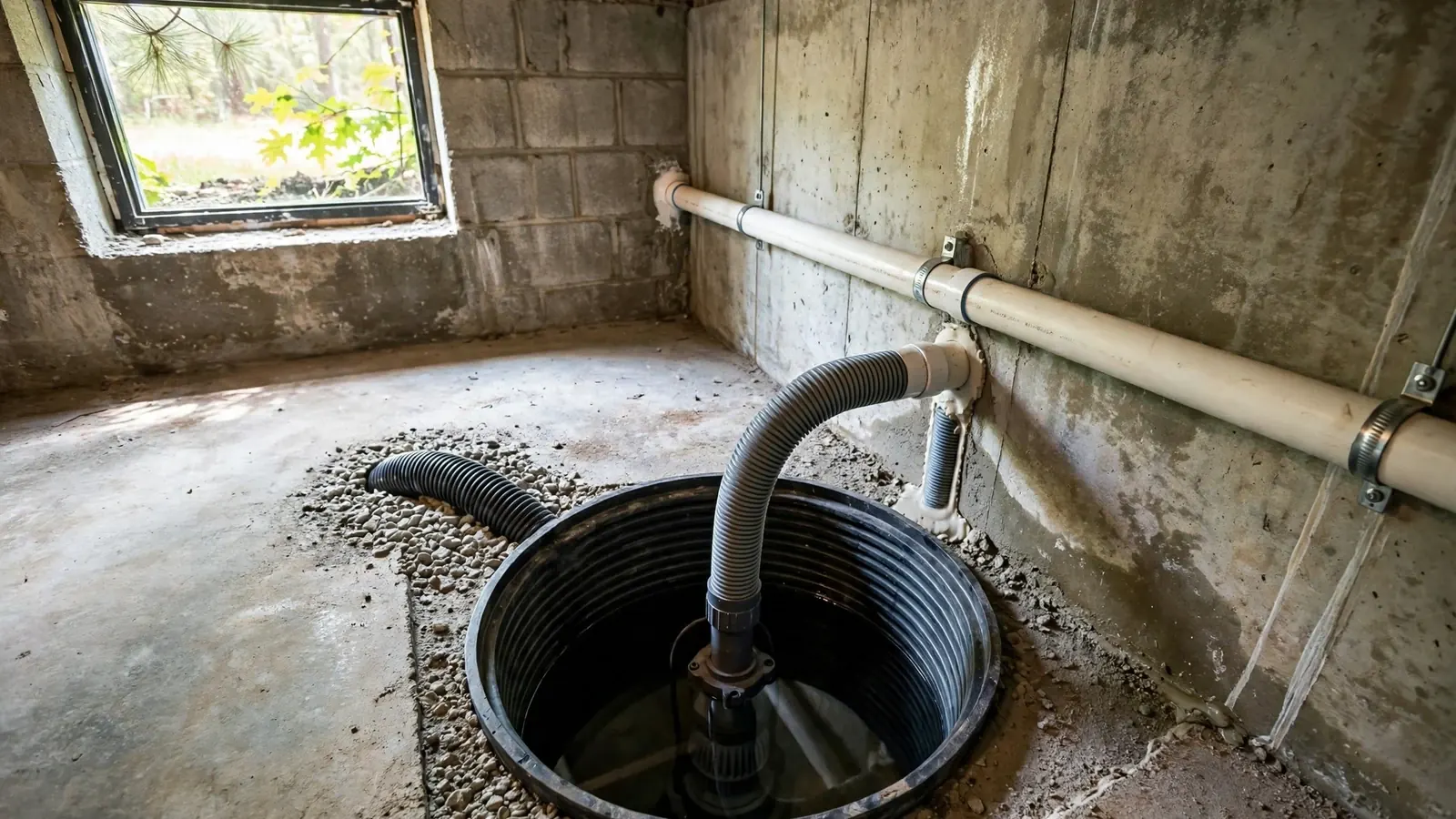
The parts of a sump system
A sump system collects water in a pit, a pump moves it out, a float switch turns the pump on and a check valve stops water from flowing back. A discharge line carries it outside. If any of these fails or is undersized, the system fails.
A pit typically sits at the lowest point of the basement and is lined and covered. In older homes without interior drains, we may add a drain channel along the floor perimeter that leads to the pit.
Choosing a pump
| Type | Strengths | Trade-off |
|---|---|---|
| Submersible | Quiet, sits in the pit | Harder to service. |
| Pedestal | Motor above the pit, easier to service | Louder and takes more space. |
| Battery backup | Works in an outage | Battery replacement every few years. |
| Water-powered backup | No battery or power needed | Uses municipal water and needs pressure. |
Discharge: where the water goes
The line should carry water away from the foundation and not toward a neighbor or into the sanitary sewer. Pumping groundwater into the sewer can overload it and is generally restricted. We route the line to a safe discharge point, add a check valve and, where freezing is a concern, plan for a discharge that will not freeze solid.
Installation checklist
For a basement that stays damp even with a pump, see basement waterproofing.
- Test the pit for water entry before you decide.
- Size the pump to the inflow.
- Install the check valve in the right position.
- Add an alarm or a backup for storms.
- Check that the discharge is clear and unrestricted.
Sizing and placement
A pump has to move water faster than it enters the pit during a storm. A pump that is too small runs constantly and fails early, and one that is too large cycles on and off in short bursts. We estimate inflow by watching the pit during a rain and by looking at the home's drainage.
The pit sits at the lowest point and away from the walls where possible, with a level base so the float moves freely. A lid keeps debris and moisture out, and an airtight lid reduces humidity and radon entry when properly sealed.
Backup power and alarms
Storms and outages often arrive together, so a primary pump with no backup is a gamble in a wet basement.
| Option | Good for | Watch for |
|---|---|---|
| Battery backup pump | Outages during storms | Battery check and replacement. |
| Water-powered backup | Long outages | Needs city water pressure. |
| High-water alarm | Early warning | Needs power or battery. |
| Generator circuit | Whole-house backup | Higher cost, other work. |
Maintenance schedule
A pump that is checked twice a year lasts longer and rarely fails at the worst time. For repair or replacement, see sump pump installation and repair.
- Pour a bucket of water into the pit each season and watch the pump start and stop.
- Clean the intake screen and the pit of silt.
- Check the discharge pipe outside for blockage or ice.
- Replace the battery in a backup on the maker's schedule.
Cost drivers for a sump installation
A written quote that lists these items lets you compare options on the same terms. Replacing a pump in an existing pit costs far less than a new pit, which is why a periodic check matters.
Breaking concrete
A new pit means cutting the floor slab and digging a hole.
Pump quality
Higher flow and sturdier construction cost more.
Discharge route
A long run or a buried line adds materials and labor.
Backup system
Battery or water-powered backup adds equipment.
Noise, odors and other complaints
A pump that rattles has debris in the intake or a failing bearing. A pump that runs when it has not rained may be pumping water from a leak and not from groundwater, and a meter test can tell the difference. A sour smell from the pit usually means stagnant water or a missing lid.
Most of these have simple fixes. If a pump runs constantly, shut it off only if you can see water is not rising, and call so the cause is found before the motor burns out.
Questions homeowners ask us
For service, see sump pump installation and repair.
How long does a pump last?
Many last several years, and a yearly test shows when one is wearing out.
Do I need a permit?
Ask Public Works, since local rules cover plumbing and discharge.
Can I run the discharge to the street?
Local rules vary, so ask before you route it.
Is a second pump worth it?
In a flood-prone basement a second pump adds protection.
What to know in Florissant
Florissant is in St. Louis County. The city lists plumbing work among residential projects needing a permit through Public Works, so ask the department whether a new pit and pump qualify and what discharge rules apply to your lot.
We have not found a published Florissant groundwater figure, so the choice of pump should rest on observed water entry in your own basement, not on a regional average.
Low-lying properties near Bridgeton and Hazelwood often ask about backup power.
Source: City of Florissant services page.
Standards and sources
Where this page describes city rules, such as permits, lateral program terms and items to keep out of drains, the City of Florissant is the source. Terms can change, so confirm with the city before you act.
Sources: City of Florissant services page.
Local questions answered
Away from the foundation to a safe outlet. Ask Public Works about local discharge rules.
If power outages and storms coincide in your area, yes, it is a good safeguard.
Before the wet season and after any storm that tripped breakers.