
What a dip tube does
The dip tube is a plastic pipe inside the tank. It carries incoming cold water to the bottom, so the hot water stays at the top where the outlet is. When the tube cracks or breaks, cold water mixes near the top and the water at your tap comes out lukewarm.
Some tubes made in the 1990s degraded early and shed bits of plastic that clog aerators and showerheads. Many modern tubes use better materials, but any tube can wear.
Signs of a failing dip tube
A bad element or thermostat can cause the same symptom, so we test those first, a simple step that avoids paying for the wrong part.
- Hot water runs out faster than it used to.
- Lukewarm water even with the thermostat turned up.
- White or tan plastic bits in aerators and showerheads.
- The tank is otherwise sound and not leaking.
What the repair involves
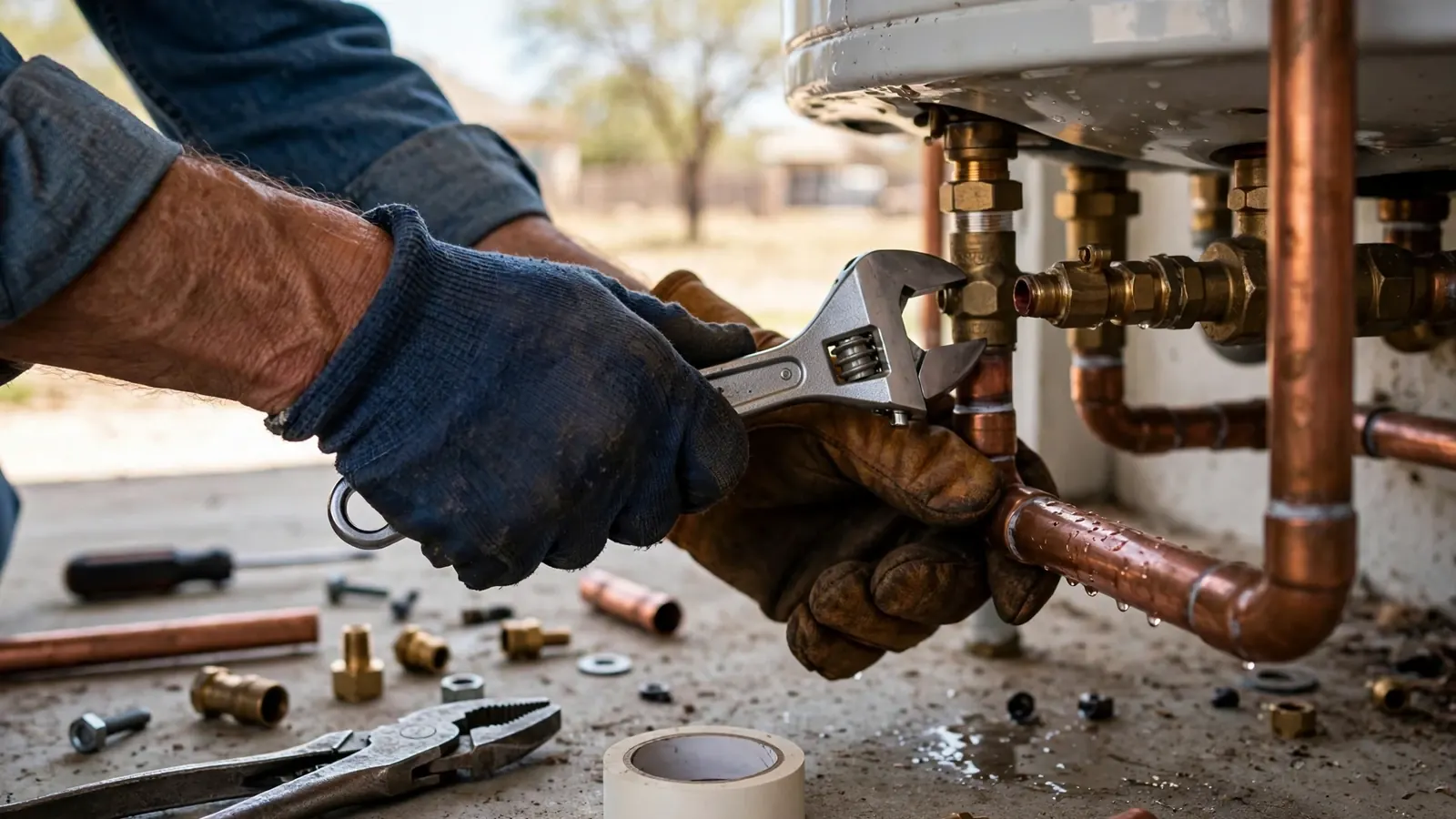
The tube threads into the cold inlet fitting at the top of the tank. The repair means shutting off water and fuel, draining part of the tank, removing the fitting and the old tube and installing a new one. On a young tank it is a good repair. On an old tank with a corroded fitting, the labor can exceed the value of the tank.
Fix or replace the heater
| Tank age | Condition | Better choice |
|---|---|---|
| Under 8 years | Fittings sound | Replace the dip tube. |
| 8 to 12 years | Fittings corroded | Compare cost with a new tank. |
| Over 12 years | Sediment and rust | Replace the tank. |
If the numbers favor a new tank, see water heater replacement.
What drives the price
Ask for the price of the tube repair next to the price of a new heater. We give both when asked.
Fitting condition
Seized nipples take longer.
Tank size
Draining a large tank takes time.
Part type
Quality tubes and fittings vary.
Access
A tight closet slows work.
Testing before you replace anything
Lukewarm water has several causes. On an electric heater, a failed lower element or thermostat limits the heat. On a gas heater, a weak burner or a thermocouple problem does the same. A failed dip tube mixes cold water into the hot supply, and only then does the tank itself stay hot while the tap runs lukewarm.
We test the temperature at the tank outlet and at the tap, check the elements or burner and then look at the dip tube. This order keeps you from buying a part that does not fix the symptom.
What to ask when you get a quote
Fittings that have sat in scale for years can break on removal. A good plumber warns you of that risk before starting and offers the new-heater price in the same visit.
- Is the price for the dip tube alone or a full inlet fitting?
- What happens if the fitting will not come off?
- How does the repair price compare to a new heater of the same size?
- Is there a warranty on the repair labor?
Extending the life of the tank you have
Small habits add years. When the tank is past its life, see water heater replacement.
Flush the tank
Draining sediment once a year keeps the bottom of the tank clean.
Check the anode rod
The rod protects the steel tank and wears out first.
Test the relief valve
Lift the lever briefly each year to check that it flows and reseats.
Mind the temperature
A setting near 120 degrees limits scale and scald risk.
What to do in the meantime
Until the repair, you can turn the thermostat up a little to offset the cold mix, but keep it below the point that risks scalding. If flakes are clogging aerators, remove and rinse the aerators and showerheads so you do not strain the fixtures.
Do not drain the tank yourself unless you know how to shut off power or gas first. A tank heated while empty can damage the element or tank, and that turns a small repair into a replacement.
Hard water and hot water complaints
Scale builds up inside tanks and on fittings, and it narrows pipes and coats elements. Missouri American Water lists hardness up to 226 ppm at its Missouri River plants, so scale is a fact of life in this area. A flush each year and an anode rod check slow the damage and make repairs like a dip tube swap easier when they come up.
If your home has no softener and hot water is getting weaker, ask about the whole picture and not only one part.
Tank sizes and replacement parts
Dip tubes come in different lengths, so the right part matches the height of the tank. Ordering a tube that is too short leaves a gap, and one that is too long can bend. A technician checks the model number and measures when needed.
Some manufacturers include the tube as part of the inlet nipple. Replacing the whole nipple is a better fix when the threads show wear, and it costs little more than the tube alone.
What to know in Florissant
Missouri American Water's 2023 report lists total hardness up to 226 ppm at the Missouri River plants. Hard water speeds scale on fittings, which can make a dip tube repair harder because the fitting is stuck.
A tank with heavy sediment is a better candidate for flushing and an anode check than for new parts. Ask the technician to look at both.
Calls about lukewarm water come from Black Jack and Ferguson too.
Standards and sources
General information on tank and tankless water heater types, efficiency and temperature settings is published by the U.S. Department of Energy. Permit rules for water heater work come from the local building office, and the City of Florissant lists plumbing among residential projects that need a permit.
Sources: U.S. Department of Energy Energy Saver guide to water heating and City of Florissant services page.
Local questions answered
It is a modest repair we see on older heaters with lukewarm water.
It is possible, but seized fittings are common in hard water areas and can damage the tank.
Remove an aerator and look for small plastic flakes.