
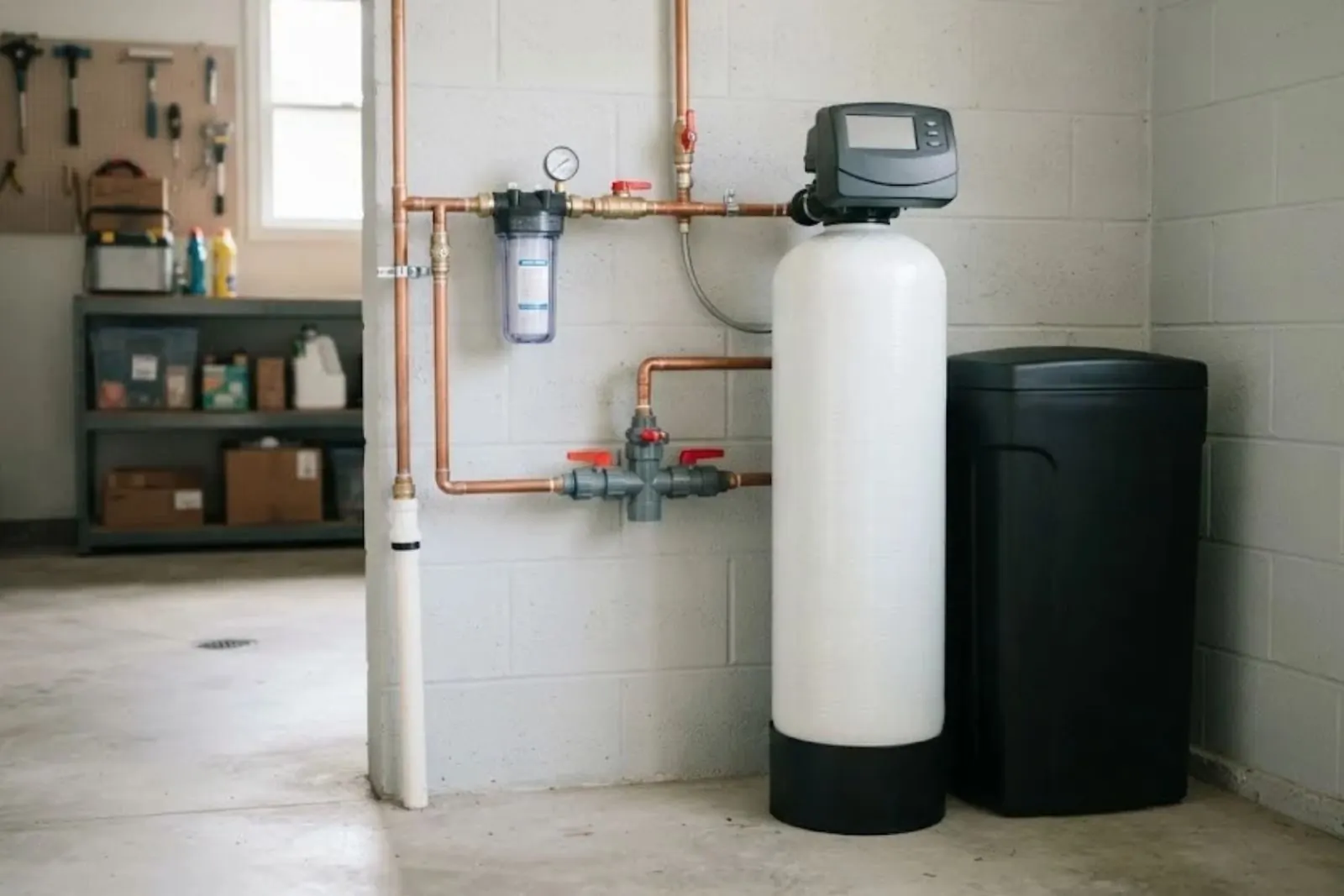
Water softener and filtration in Florissant, MO
Water softener and filtration service in Florissant, MO depends on what is in your water. Missouri American Water supplies most of St. Louis County from the Missouri and Meramec rivers, and its 2023 report lists total hardness at the Missouri River plants between 82 and 226 ppm. That is roughly 5 to 13 grains per gallon.
Hardness varies by plant and over the year, so a test at your own tap beats a guess. If you see scale on faucets, white spots on glass or a crust on a kettle, softening is worth discussing.
What the utility report does and does not tell you
The report is a regional summary covering treatment plants in the St. Louis County system, and it does not name a plant for any one street. It also lists chloramine as the disinfectant and a high pH from lime softening. Because the numbers are regional, we recommend a simple home test strip or lab test for hardness, chlorine and iron before sizing any equipment.
Want a straight answer on softeners? Call us.
Call (314) 461-6239Choose by problem, not by brand
| Problem | Typical equipment | Note |
|---|---|---|
| Scale, spots, dry skin | Salt-based softener | Needs salt and a drain. |
| Chlorine or chloramine taste | Carbon filter | Cartridge changes on schedule. |
| Drinking water polish | Reverse osmosis at one tap | Adds a separate faucet and drain. |
| Iron stains | Iron filter | Test iron first. |
What a softener does for your plumbing
Scale builds on heating elements, inside tankless heat exchangers and in aerators. A softener upstream of the heater extends heater life, though you should still flush the tank. See water heater installation and tankless water heater service for how scale affects each type.
Honest limits
A softener does not remove chloramine or chemicals, and it uses salt and water to regenerate. Some homeowners prefer a filter alone. We explain the trade-offs and do not push equipment your water does not need.
Choosing between softening and filtering
Softeners and filters solve different problems, and many homes use one of each. We install either and explain the upkeep before you buy.
| Goal | Equipment | Note |
|---|---|---|
| Reduce scale on fixtures and heaters | Salt-based softener | Needs salt and a drain. |
| Improve taste and odor | Carbon filter | Replace cartridges on schedule. |
| Drinking water polish | Reverse osmosis at one tap | Small waste stream. |
| Sediment | Whole-house sediment filter | Change as pressure drops. |
What installation involves
A softener installs on the main water line, usually near the water heater, with a bypass valve and a drain line for the regeneration cycle. It needs power and a place for salt. A filter installs before or after the softener depending on the goal.
Plan floor space and a drain before choosing a size, and keep outdoor spigots on unsoftened water if the home is plumbed for it. Our water heater repair team sees the scale that a softener prevents.
Care and costs after installation
A softener uses salt and some water for each regeneration. Check the salt level monthly, keep the brine tank clean and set the hardness to match your water. Missouri American Water reports total hardness up to 226 ppm at its Missouri River plants, which gives you a figure to start from, and a test strip on your own tap tells you more.
Filter cartridges need replacement on the maker's schedule, and a reverse osmosis system needs a membrane change every few years. We can set a reminder schedule and stock the parts you will need.
What affects pricing
You get the price before work starts. Call (314) 461-6239.
Equipment size
Matched to hardness and household size.
Installation
Drain, bypass, electrical outlet and salt location.
Water test
Test results shape the plan.
Maintenance
Salt, cartridges and annual checks.
Standards and sources
Hardness figures on this page come from the annual water quality report published by Missouri American Water. Test your own tap for a number that applies to your house.
Water Softener and Filtration questions from Florissant homeowners
The 2023 Missouri American Water report lists total hardness of 82 to 226 ppm at its Missouri River plants, roughly 5 to 13 grains per gallon. Test your own tap.
If scale and spotting bother you or your heater struggles, it is worth considering. Many homes do fine without one.
No. A carbon filter handles taste and odor from disinfectants.
Planned work is by appointment. For a leaking unit, call (314) 461-6239 any hour.
Salt-free conditioners change how scale forms but do not remove hardness minerals. Ask us what fits your goal.
A hardness test is the cheapest first step you can take. Call (314) 461-6239.